
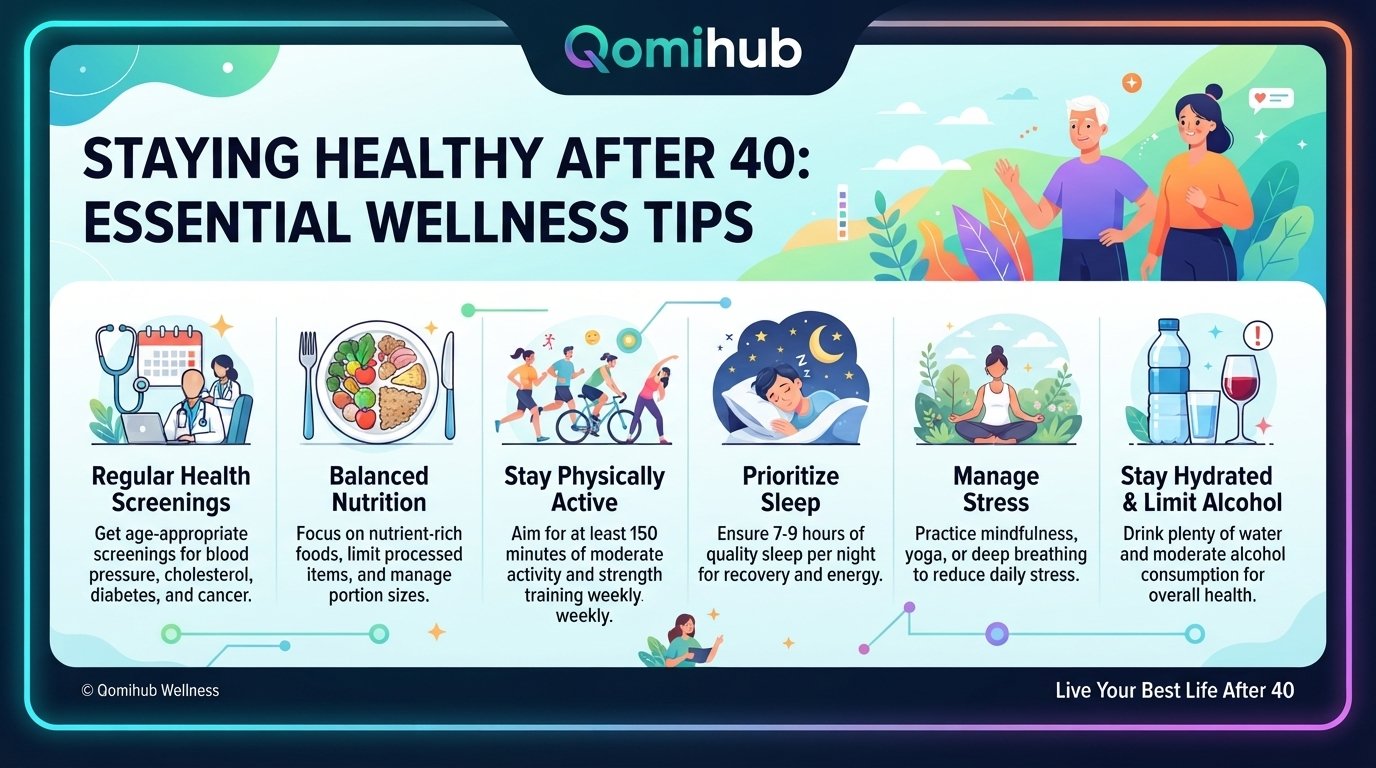
Turning 40 does not turn on any magical switch in your metabolism: you start to age, and the changes are inevitable. Your metabolism slows down, you start to lose muscle mass if you do not put in sufficient effort. All the sins of youth catch up with you in the form of weight problems. But how to stay healthy after 40? Describe a few simple rules that will keep you healthy and vital for many years after 40. Most of these rules will seem logical to you, but until now, you have probably never followed them.
Why 40 Feels Like a Turning Point
Around this age, your body begins to lose muscle mass at an accelerated pace (unless you resist the process). Your metabolism slows down, albeit not by much, which means that your calorie consumption will start to decrease. The hormone levels in both men and women begin to change, which leads to increased fatigue, disrupted sleep, and a greater propensity to store fat.
In itself, this process is not daunting; rather, it informs you of what changes to expect in the near future. In doing so, you can make the necessary adjustments to your body to ensure continued good health.
Build Strength, Not Just Cardio
A lot of people over 40 are obsessed with cardio walking, running, biking which is great for the heart, but strength training becomes critically important after age 40. You need muscle mass, which is your prime mover. Muscle mass helps protect joints; it's needed to stay independent in one's 60s, 70s, and beyond.
You can do two or three short strength-building workouts per week, using free weights or just body weight, and you'll see improvements in lean muscle mass and a decrease in body fat after several months of consistent workouts. It's never too late to build muscle but the sooner you start, the better.
Rethink How You Eat, Not Just What You Eat
The diet after 40 is not about deprivation but rather a shift in priorities. Your body needs more protein to maintain your muscle mass since the age of 40, and your muscles account for 40% of your body weight. The fiber in your diet is important for easing digestion, lowering blood sugar, and making you feel full. This means that you are less likely to snack mindlessly on the next bag of chips.
As you get older, your metabolism starts to slow down. It is normal and healthy to reduce the portions that you ate at 35, since your body burns fewer calories than before. However, gradual changes to your diet can help avoid unnecessary weight gain and are easier to maintain in the long run.
Sleep Stops Being Optional
In your 20s bad night of sleep here and there wasn't a big deal. After 40, chronic sleep deprivation will mess with your hormone regulation, weight, mood, memory, and so much more - not to mention that it's incredibly difficult to just push through once you're past a certain age. Sleep quality has so much more impact on your health than the majority of supplements you can think of, and it's extremely easy to optimize. Just set a bedtime alarm and stick to it, dim the lights before bed, and avoid screens at least an hour prior to sleeping.
I know people who have considered 5-6 hours to be a full nights rest for the majority of their adult lives. Trust me when I say that this is an upgrade that will benefit you exponentially.
Manage Stress Like It's Part of Your Health Routine
Chronic stress is a serious problem that has negative side effects, including high levels of cortisol, poor sleep, weight gain around the waist, and a weakened immune system. After forty, jobs, children, elderly parents, and mortgages can combine to create stress that seems close to permanent.
The good news is that you don't have to sit cross-legged on a meditation cushion for an hour every day to see improvement. Even ten minutes of breathing space can help, as can a weekly silent retreat from technology or a long walk on a weekday evening, free from the distractions of cell phones and texts.
Don't Skip the Screenings
This is the one that everyone puts off the longest, for no good reason. Blood pressure, cholesterol, blood sugar, and (if you're male and over 40, or female and over 50) screenings for particular diseases become really important after age 40: catching things early and treating them is much easier than doing the opposite.
If you haven't had a general physical in the last year or two, that's a priority over everything else on this list.
Stay Connected
It seems unrelated to the concept of health, but social connection has a scientifically-proven impact on longevity and wellbeing. As life becomes increasingly busy after the age of 40 - with work, family and other responsibilities consuming more and more time and energy - many people find that they no longer have the resources to invest in their relationships. Maintaining those bonds, however, is an important part of being healthy in a holistic sense.
Frequently Asked Questions
What is the most important habit to develop after 40?
If I could choose only one, it would be to strength train. That will help you maintain your muscle tissue, and it will reduce the risks of a number of health conditions.
Do you think that people after 40 should take supplements?
No, I don’t believe that people after 40 should take them. Mostly because they should get their vitamins and minerals from food. However, there are some exceptions, and those should be determined by blood tests and a medical professional.
What amount of exercise is appropriate for people over 40?
Most fitness experts recommend at least 150 minutes of a moderate workout and two to three strength training sessions per week. That is a significant amount, but if you break it down into half-hour sessions, you will see that it is quite achievable.
Is gaining weight unavoidable after 40?
Gaining weight is definitely possible, but it is not a must if you watch your calorie intake and have a well-balanced diet.
💬 Comments
Be the first to comment.
Login to leave a comment.