
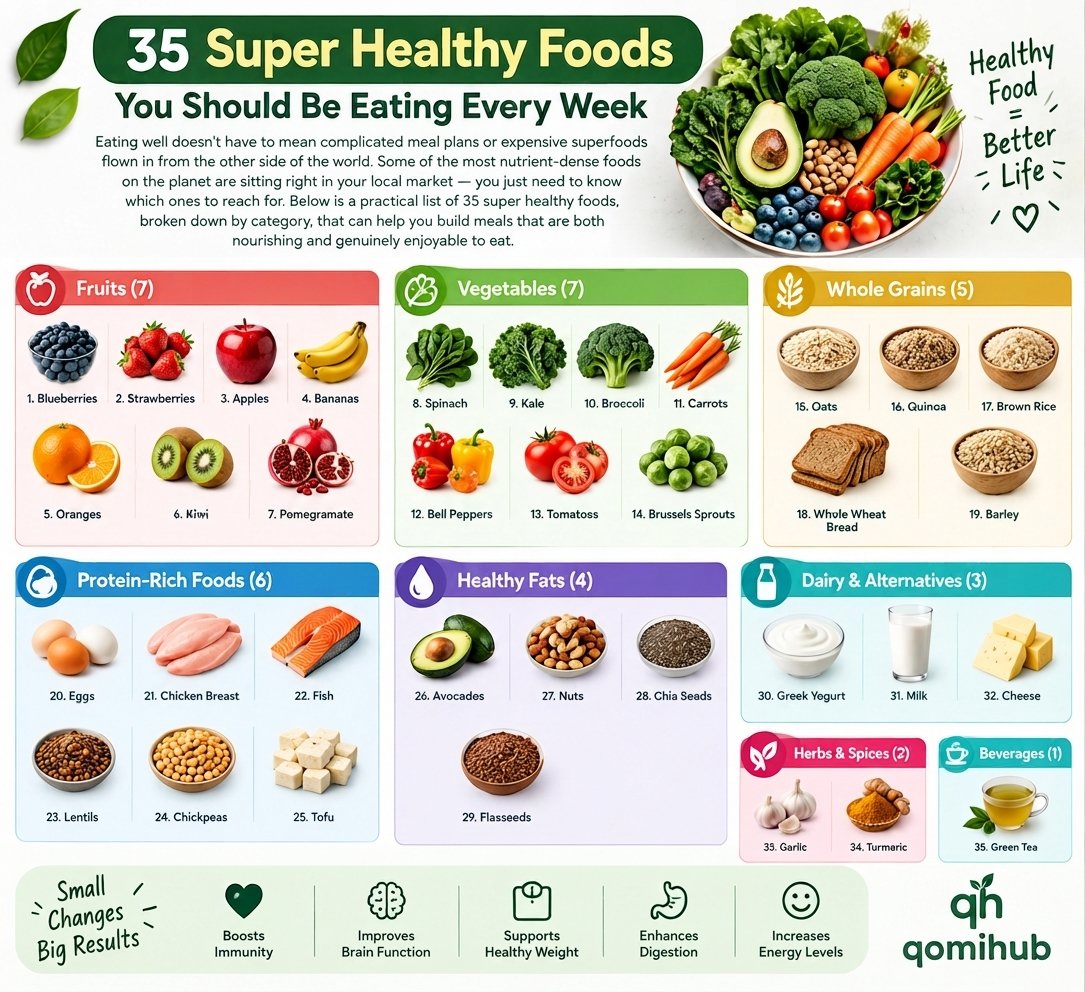
Eating healthier doesn't mean making your life difficult by following some really strict and demanding diet plans. Instead, it might just mean learning how to eat more of the nutrient packed foods that are right around you and not spending a lot of money on exotic items that only grow in other parts of the world. Here's a list of 35 different incredibly healthy foods that you can find at the nearest supermarket. They are grouped in categories for easy access so that you can prepare more healthy and balanced meals while still enjoying your food.
What Actually Makes a Food "Healthy"?
Before you go any further and check out the list, there are certain parameters that every healthy food item should meet. First and foremost, a healthy item is most often minimally processed and has little added sugar and sodium. It also has a good amount of the nutrients that the body needs to stay healthy including fiber, protein, and fat, and it has the necessary vitamins and minerals to help the body function at its best. All of this together keeps you feeling full longer, helps your immune system stay strong, and lowers your chances of getting chronic diseases.
Now, without any further ado, here are 35 different foods that are healthy and should be included in your diet on a regular basis.
Fruits Worth Stocking in Your Kitchen
1. Apples – A fruit that is perfect for a quick snack. It has lots of fiber and vitamin C and plenty of natural sugars.
2. Avocados – The only fruit high in healthy fats instead of carbohydrates. High in potassium and fiber, too!
3. Bananas – A potassium-packed fruit that is great before or after a workout.
4. Blueberries – These are one of the most antioxidant-rich fruits you can eat.
5. Oranges – In addition to the vitamin C, oranges have lots of fiber and other healthy compounds.
6. Strawberries – Low in calories and carbs but high in vitamin C and manganese.
Proteins You Should Stock Up On
7. Eggs – Eggs are one of the most nutritious foods you can eat. They contain healthy fats, protein, and amino acids that your body needs to function.
8. Lean beef – Lean beef is high in protein and iron-rich. Eating it in moderation is key to reaping the rewards of this superfood.
9. Chicken breast – It is a very lean protein that has lots of B-complex vitamins and potassium.
10. Lamb – Lamb is a good source of iron and omega-3 fatty acids.
Nuts & Seeds You Should Stock Up On
11. Almonds – High in vitamin E, magnesium, and other minerals, almonds have been shown to promote weight loss, better digestion, and even sharper memory.
12. Chia seeds – These tiny powerhouses pack nearly 10 grams of fiber per ounce. Chia seeds are also a good source of magnesium and calcium.
13. Coconut – A good source of fiber and medium-chain triglycerides (MCTs) that your body converts to energy.
14. Macadamia nuts – Higher in monounsaturated fats than most other nuts, and much lower in omega-6 fats.
15. Walnuts – A good source of fiber and omega-3 fatty acids. They are also great added to a salad or eaten with cheese.
16. Brazil nuts – Just two of these toasty little nuts will give you your daily requirement of selenium, an important antioxidant that helps your thyroid function properly.
Vegetables You Should Stock Up On
17. Asparagus – Low calorie, high in vitamin K, and very easy to prepare.
18. Bell peppers – Versatile and full of vitamin C and other antioxidants, especially the red ones!
19. Broccoli – This cruciferous vegetable has lots of fiber and vitamin C, plus it has more protein per serving than most other vegetables.
20. Carrots – Sweet and crunchy, carrots are a great source of carotenoids like beta-carotene that are good for your eyes.
21. Cauliflower – Great for roasting or stuffing, or as a low-carb alternative to rice or pasta.
22. Cucumber – Mostly water, cucumbers are low in calories and a good source of hydration.
23. Garlic – Garlic contains allicin, a compound with antioxidant and antibacterial properties.
24. Kale – This leafy green is full of fiber, vitamin C, and vitamin K. Can be used in salads or baked like chips.
25. Onions – A staple in the kitchen, onions can add flavor and nutrition to many dishes.
26. Tomatoes – Technically a fruit, but they are a good source of potassium and vitamin C to add to your meals.
Seafoods You Should Stock Up On
27. Salmon – A powerhouse source of omega-3 fatty acids that help lower blood pressure and reduce inflammation.
28. Sardines – Small, but mighty! Sardines provide calcium and vitamin D, and are very high in protein and omega-3s.
29. Shellfish – Mussels, clams, and oysters are all excellent sources of nutrition, and make for a healthy and filling snack or meal. Just make sure to get them from a reputable source.
30. Shrimp – Low in calories and fat but high in protein, zinc, and other minerals, shrimp is a good addition to any meal.
31. Tuna – Another lean protein that is high in protein but low in calories. Just make sure to know where your tuna comes from. Whole Grains & Legumes
32. Brown rice – This whole grain version of white rice provides fiber, B vitamins, and minerals like magnesium.
33. Oats – A good source of beta-glucan fiber, which can help reduce cholesterol and support a healthy gut.
34. Quinoa – This grain has all the essential amino acids, making it a complete protein, and provides fiber, too.
35. Lentils – These legumes are high in fiber, and an excellent plant-based protein source.
A Few Honorable Mentions
In addition to the above, make sure to include the following items in your daily diet: Greek yogurt for healthy bacteria, extra virgin olive oil for monounsaturated fatty acids, sweet potatoes for beta-carotene, and a square of dark chocolate for antioxidants (and because it's delicious!)
Also Read: Almond Oil Benefits for Eye Health and Overall Wellness
Frequently Asked Questions
What are the healthiest foods to eat every day?
A diet comprising an array of fruits, vegetables, whole grains, protein sources and healthy fats may supply the nutrients that one’s body requires on a daily basis. The combination rather than the individual components is what seems to have the most positive effect on the human body.
Are there specific healthiest foods to eat?
There is no single healthiest food as a person’s body needs a variety of nutrients for proper function. Some foods, however, appear to be more wholesome than others. These include eggs, leafy greens, fatty fish, legumes and many others.
Can eating these foods cause one to gain weight?
It is not likely as most of these foods are high in fibre or protein which make one feel satiated for a long time after eating them. Thus, they can be used to control body weight.
Do nuts and seeds fit the bill but they are high in calories?
The caloric content of these foods is not an issue as long as one eats them in moderation. It has been proven that nuts and seeds can help shed excess pounds.
💬 Comments
Be the first to comment.
Login to leave a comment.