
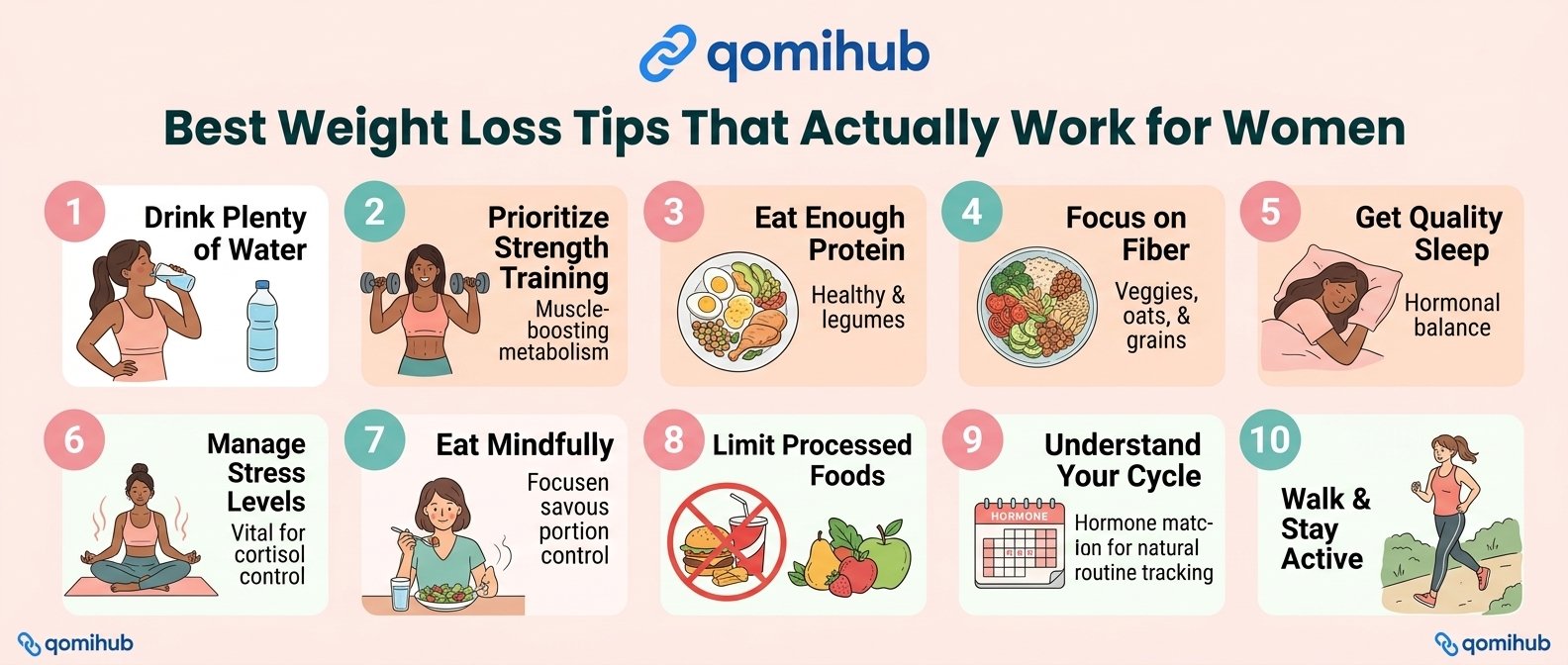
Every January (or any Monday morning) millions of women set a new year intention about losing weight. After a few days of motivation old bad habits come back, the weighing scale does not change and the same old disappointment comes back again. The thing is that all these fad diets are built in such a way to fail from the beginning. Here are the things that will really help women to finally lose those pounds and keep them off in a healthy and lasting way. Forget about fast lose diets, cabbage soup and 6-day-a-week 4 am workouts!
Why Weight Loss Can Feel Harder for Women
Before getting to the tips, let's discuss some unique challenges women face when trying to control their weight since the suggestions below address them specifically. Female bodies going through hormonal changes during the menstrual cycle and menopause or having children undergo tremendous pressure and turn fat into fat more actively. Stress, lack of sleep, a sedentary lifestyle, and specific medications also affect female weight and are often out of ordinary women's power to control. That is why most of the tips below are not aimed at everybody but women specifically.
1. Drink Water Before Meals
This is one of the easiest, most scientifically supported weight loss tips for women. Water intake has an amazing ability to temporarily accelerate metabolism. According to the research conducted, people on a diet who drank about half a liter of water 30 minutes before meals could eat less and lose much more weight than those who did not. In addition, drinking water before eating reduces the amount of food that fits in the stomach, thereby naturally reducing appetite. This trick requires no effort and allows you to start right now.
2. Prioritize Protein at Every Meal
Protein is one of the most satiating nutrients there is, and it also helps maintain lean muscle mass as you lose weight — which is especially important for women, who generally tend to lose muscle mass as they age, starting with menopause (and they need to preserve it because they no longer have the option of carrying extra body fat and putting additional strain on joints). Having a high-protein food at every meal — eggs, Greek yogurt, lentils, chicken, fish, tofu, or cottage cheese — will increase satiety and help reduce unhealthy snacking at the next meal. Studies have even shown that eating more protein at breakfast — say, eggs instead of a bagel — can reduce overall daily calorie intake.
3. Build Meals Around Whole, Minimally Processed Foods
Instead of eliminating entire categories of food, it is necessary to fill plates with whole grains, vegetables and fruits, lean protein, and fat to eat. The most effective way to promote lasting weight loss is to adopt a diet that is centered on minimally processed foods; such a diet tends to result in more pounds dropped than a fad diet, but it is easier to stick to since it doesn't involve drastic changes. The modifications to the eating pattern that lead to gradual weight loss tend to be more effective over time than quick, sweeping changes.
4. Strength Training Matters as Much as Cardio
Cardiovascular exercise burns calories during the workout, but resistance training develops and maintains lean body mass, which in turn supports a healthy metabolism both during and outside of workouts. As far as women are concerned, it is critical to include strength training two to four times per week to complement their body composition, bone density and metabolic health, in addition to the number on the scale. It is important for women to engage in resistance training because of the higher risks they face in terms of bone density decrease as they age.
5. Get Enough Quality Sleep
When it comes to weight loss, sleep is the neglected aspect. Lack of proper sleep and insomnia can raise hunger hormones causing you to eat more calories the following day. Aim to get 7-9 hours of quality sleep every night, and you will notice that it becomes much easier to stick to all the other healthy habits on your journey to shedding pounds.
6. Manage Stress to Avoid Emotional Eating
Chronic stress increases cortisol levels in your body. It makes you feel hungry for unhealthy snacks that give you empty calories and makes you store fat around your waist. It can be an effective tool to aid in weight loss by making lifestyle changes. Adding some type of stress reduction activity into your daily routine such as taking a walk, keeping a journal, or even finding time to relax can help you lose weight that you can't seem to lose by eating right and exercising alone. Often times we eat due to emotional reasons instead of actual hunger. Knowing the difference can be a valuable skill to learn.
7. Focus on a Moderate, Sustainable Calorie Deficit
A diet that involves a substantial decrease in calorie intake is frequently counterproductive because it increases cravings, decreases metabolic efficiency, and creates a situation in which weight is rapidly regained once the diet is abandoned. Instead, a moderately low calorie diet is easier to maintain and healthier in the long term. Keeping track of meals for a brief period of time (up to a week or two) can help in estimating general patterns of nutrition and make changes in diet more rational and effective.
8. Add More Fiber to Your Diet
Fiber-rich foods, including vegetables, legumes, whole grains, and fruits, improve satiety by slowing digestion and making the contents of your stomach empty out more slowly, thereby naturally reducing your appetite. Moreover, dietary fiber is positively associated with the health of the gut microbiome, which is increasingly linked to body weight and metabolism.
9. Move Consistently, Not Perfectly
You don't need a punishing workout schedule to see results. Many women give up the exercise not because it doesn't work, but because they never expected a certain routine to last. You need to constantly move in order to keep your muscles strong enough, but an hour-long workout five times per week and daily jog two miles each time is an unsustainable schedule no matter how you slice it.
10. Be Patient With Non-Linear Progress
Weight loss in women can be a tricky business since their bodies tend to change with their menstrual cycle. It is normal for the bodies of women to gain or lose weight due to hormonal changes. In this regard, it is more important to note the patterns of the weight loss per week instead of focusing on day-to-day changes. This will help an individual accept the plateaus and stay focused and positive instead of getting frustrated and demoralized.
Also Read: How to Lose Weight: 12 Simple, Sustainable Tips
Final Thoughts
There are no tricks that help women to lose weight rapidly and safely. Therefore, do not believe those who want to make you a victim of their fraud. Focus on the balanced nutrition, sport, sleeping, and stress levels. Everything is achieved by time and patience; one glass of water more per day, one additional hour of training, and one hour's earlier bedtime.
Frequently Asked Questions
What is the best weight loss tip for women?
There is no best weight loss tip for women because the overall weight loss outcome is determined by a combination of factors. Therefore, the best weight loss solution is to reduce the daily calorie intake by a small amount, maintain a healthy and balanced diet that includes sufficient amounts of protein, stay active with regular weight training, and get enough sleep because all these elements are beneficial for the body.
Is there a recommended weight loss rate per week for women?
The recommended weight loss rate per week for women is 0.5-1 kg (1-2 lbs). Hence, it is possible to lose weight in a healthy and steady manner, without putting the body’s health at risk, if a person reduces their daily calorie intake and increases their activity level.
Is it harder for women to lose weight after menopause?
Yes, it is harder for women to lose weight after menopause because female bodies undergo significant hormonal changes, and these changes usually result in increased body fat levels. Thus, it may be necessary for women to make certain adjustments to their weight loss plans, such as emphasizing strength training and getting enough protein, in order to be able to continue losing weight effectively.
Can stress prevent you from losing weight?
Yes, stress can prevent you from losing weight because stress increases levels of cortisol, a hormone responsible for weight gain. Therefore, stress reduction should be considered when you want to lose weight.
💬 Comments
Be the first to comment.
Login to leave a comment.