
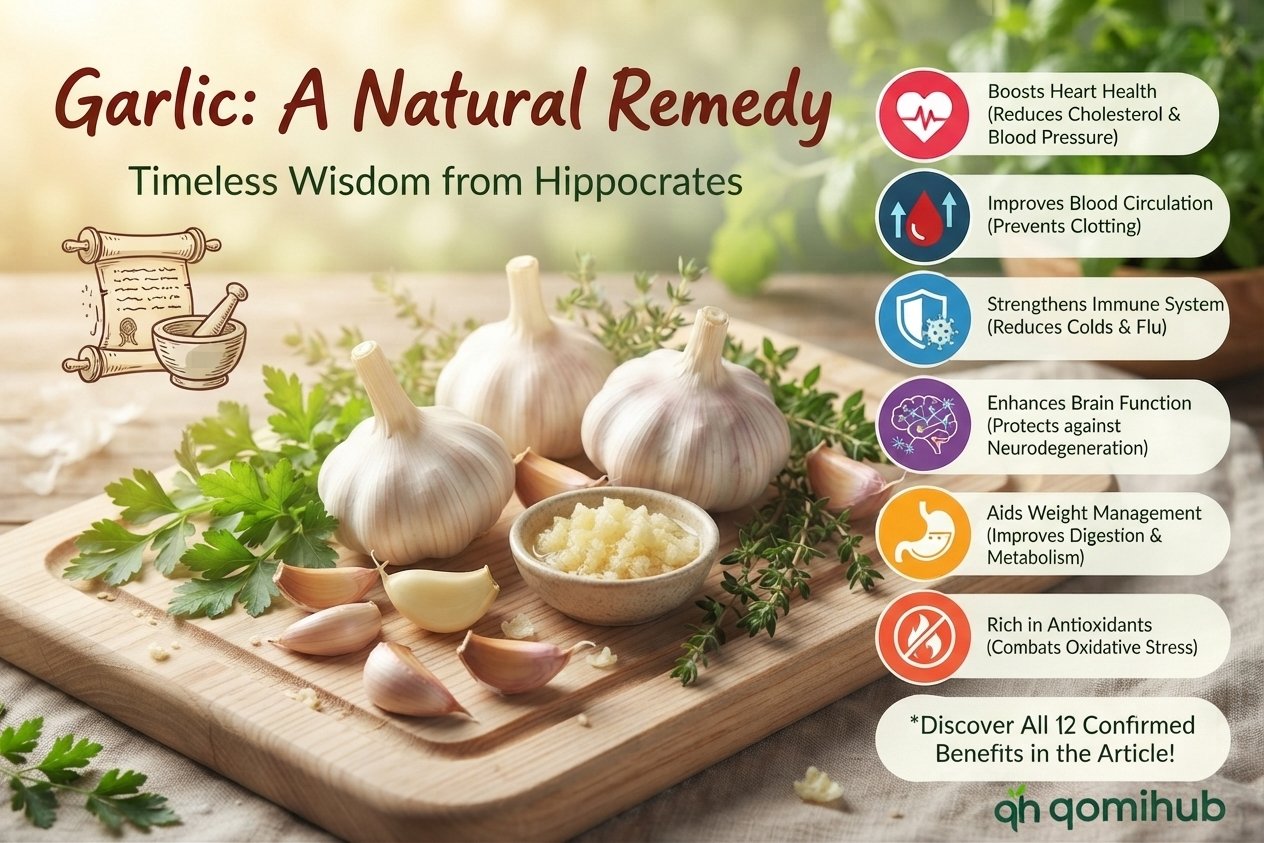
"Let food be thy medicine, and medicine be thy food." Those are words of wisdom from Hippocrates, the ancient Greek physician who is regarded as the father of modern medicine. Hippocrates is said to have employed garlic as a cure for numerous ailments, and contemporary science is beginning to catch up to his claims. Read on to discover the 12 health benefits of garlic that science has been able to confirm.
1. Garlic Is Packed With Medicinal Compounds
Garlic has been used for centuries as a medicine and a food additive. Many of its compounds are sulfur-containing, and they are formed when garlic is crushed or chopped in order to eat or prepare it. Allicin, a major compound, is short-lived and only present in freshly prepared garlic. Other major components of interest include diallyl disulfide and S-allyl cysteine. After being ingested, these compounds are absorbed via the digestive tract, entering the circulation system, where they exert their health effects.
2. Highly Nutritious with Very Few Calories
Garlic contains quite a number of nutrients for such a low-calorie food. Manganese, vitamin B6, vitamin C, fiber, and calcium are found in relatively large quantities in garlic.
3. Can Lower Blood Pressure
High blood pressure is a leading risk factor for developing cardiovascular diseases, which are among the leading causes of death worldwide. Studies on the impact of garlic on blood pressure show inconsistent results, with many concluding that garlic in sufficient doses (as a supplement) can effectively reduce blood pressure, although its effect is somewhat lesser than that of commonly used anti-hypertensive medications.
4. Improves Cholesterol Levels
Consistently with the picture that emerges about the beneficial effects of garlic on the cardiovascular system, studies on animals and humans show that garlic can reduce levels of “bad” cholesterol (LDL) by about 10-15% in people with high cholesterol. At the same time, it does not affect “good” cholesterol (HDL) and triglycerides.
5. Contains Powerful Antioxidants
The sulfur-containing compounds in garlic are not only good for the cardiovascular system; they also act as antioxidants. Oxidative stress damages cells and tissues, accelerating the development of many diseases associated with aging. Interestingly, garlic reduces the levels of oxidative stress, and some studies even show that large doses of garlic supplements may increase the body’s natural antioxidant potential.
6. May Help Prevent Alzheimer’s Disease and Dementia
Alzheimer’s disease and dementia are serious conditions that significantly reduce the quality of life and are often associated with aging. Oxidative stress plays a major role in the development of these diseases. Thus, the ability of garlic to reduce oxidative stress may explain its potential for preventing these conditions. However, while the evidence is strong in theory, more human studies are needed to confirm this hypothesis.
7. Can Help You Live Longer
Based on the combined effect of the health benefits described above, researchers have concluded that garlic may actually help people live longer. Although it is difficult to prove this hypothesis directly, one can notice that populations traditionally consuming large amounts of garlic have consistently lower rates of cardiovascular diseases and better overall health.
8. Helps Athletes Exercise Longer
Garlic as a pre-workout supplement has been known since ancient times: it was believed to reduce muscle fatigue during physical activity. Although the human studies on the matter are limited, some of the garlic-containing supplements were found to reduce exercise-induced fatigue in rodents. Again, human studies are needed to confirm whether the same would apply to people.
Also Read: How to Lose Weight: 12 Simple, Sustainable Tips
9. Garlic Can Help the Body Detoxify Heavy Metals
Sulfur-containing compounds in garlic have been shown to be useful for reducing heavy metal poisoning. In a controlled study on people exposed to lead, garlic was found to reduce the levels of lead in the blood, as well as alleviate the symptoms of lead poisoning. In general, garlic helps the body get rid of heavy metals through natural detoxification processes.
10. May Improve Bone Health
Garlic may be good not only for the cardiovascular system and the liver but also for the bones. Animal studies show that garlic can help reduce bone loss by increasing estrogen levels in menopausal women and estrogen deficiency is a major risk factor for osteoporosis. However, human studies are needed to confirm whether the same applies to people.
11. Garlic Boosts the Immune System
Garlic has a long history of use in the common cold – both in prevention and treatment. A controlled trial found that people taking garlic supplements regularly had significantly fewer colds than those taking a placebo. Furthermore, garlic also seemed to reduce the duration of a cold in those who still got sick.
12. Easy to Add to Your Diet
Unlike many other healthy foods, garlic is easy to add to most dishes. It can be used fresh, whole, or in powder form – and in a variety of different preparations. To preserve the beneficial compounds, garlic should be sliced or minced and left for about 10 minutes before being added to the dish or consumed.
Frequently Asked Questions
How much garlic is healthy to ingest per day?
Most studies that show positive effects of garlic ingestion have used roughly the amount of 1-4 cloves of garlic per day, although it may depend on what benefits one is trying to achieve.
Is raw garlic better than cooked?
Yes, for the most part. Crushing or chopping garlic releases an active component, allicin, which is beneficial to our health, but it is highly unstable at high temperatures, meaning that it is best to eat garlic raw or only slightly cooked.
Can I substitute blood pressure or cholesterol medication for garlic?
Unfortunately no. Although there is evidence suggesting that garlic can reduce blood pressure and cholesterol, it is not recommended to try and stop taking medication by yourself, always consult a medical professional before altering your dose of medication.
Are there any harmful side effects of garlic?
Garlic is generally safe to consume in food amounts. However, in large medicinal amounts it may cause indigestion or bloating. It may also interfere with some medications, such as blood thinners. Garlic can temporarily increase odor in the breath and the body.
💬 Comments
Be the first to comment.
Login to leave a comment.